
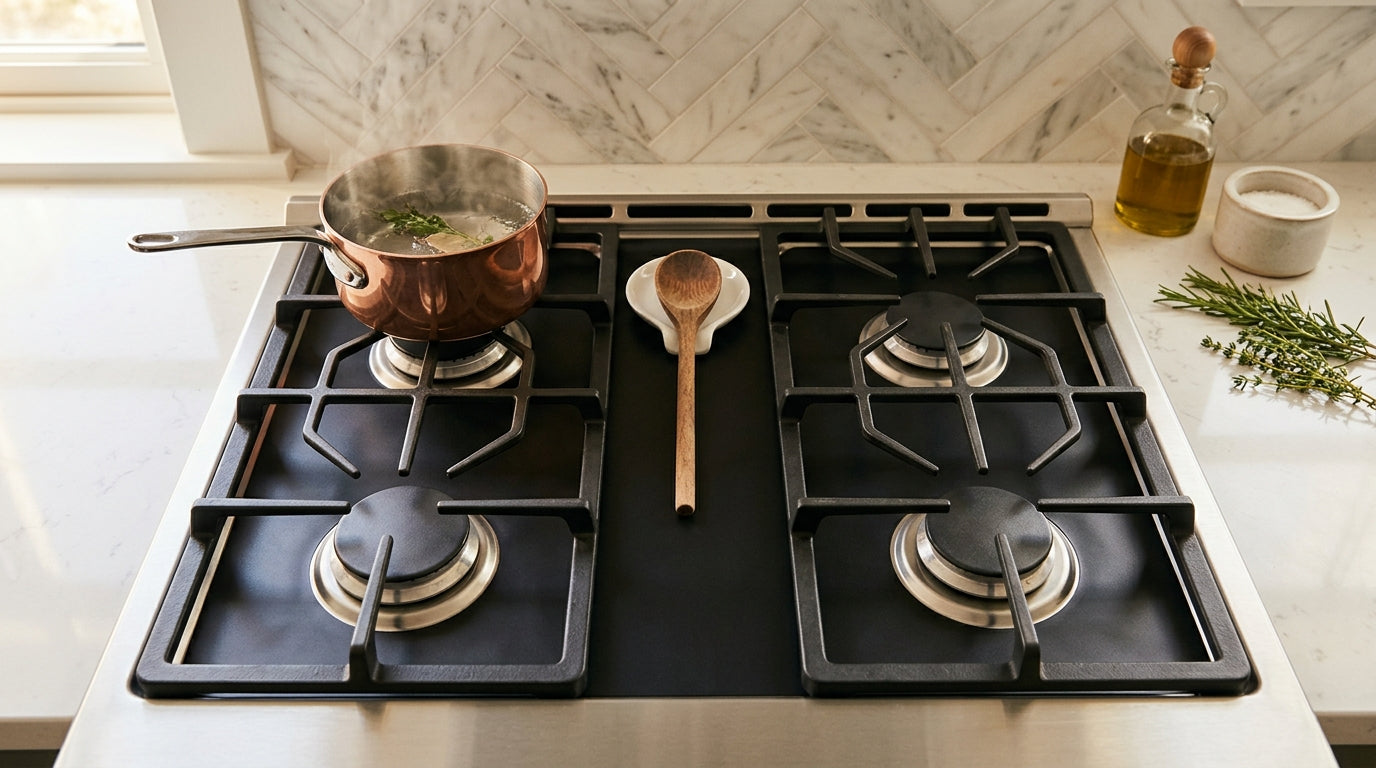
If you are shopping for a stove top liner or protector, you have probably seen the term PTFE on the packaging and wondered: is this material actually safe to put on my stove? The short answer is yes, when used correctly. Here is everything you need to know.
What is PTFE?
PTFE stands for polytetrafluoroethylene, a synthetic fluoropolymer discovered by Roy Plunkett at DuPont in 1938. It is one of the most chemically inert and heat-stable plastics ever developed. You probably know it by its most famous brand name: Teflon, which is a trademark of Chemours (formerly DuPont). PTFE and Teflon are the same material.
Is PTFE safe for cooking surfaces?
PTFE is approved for food-contact use by the FDA under regulation 21 CFR 177.1550. It is used in non-stick cookware, baking sheets, and food processing equipment worldwide. At normal cooking temperatures (below 500°F / 260°C), PTFE is completely stable and does not release fumes or break down.
PTFE only begins to decompose above 570°F (300°C), and the temperatures where harmful fumes become a concern are above 660°F (350°C). For context, most home cooking happens between 200°F and 450°F. A stove top liner sits on the surface around the burners, not over an open flame, so it never approaches decomposition temperatures.
PTFE vs PFOA: the important distinction
Much of the health concern around non-stick coatings is actually about PFOA (perfluorooctanoic acid), which was historically used as a processing aid in manufacturing PTFE coatings. PFOA has been linked to health concerns and has been largely phased out of production since 2015.
Modern PTFE stove liners, including those made by FireFly Home, are PFOA-free. Our liners are independently tested by SGS (the world’s largest inspection and certification company) and certified as compliant with FDA 21 CFR 177.1550 for food contact (report number TSNPC25003211102).
How PTFE stove liners work
A PTFE stove liner is a thin sheet (typically 10mil or about 0.25mm thick) of fiberglass coated with PTFE on both sides. The fiberglass provides structural strength and heat resistance, while the PTFE coating creates a non-stick surface that repels grease, food spills, and boilovers.
The liner sits flat on the stove top surface around the burners. When a spill happens, it lands on the liner instead of baking onto the enamel or stainless steel surface. You simply remove the liner, wipe it down or put it in the dishwasher, and replace it.
Safety guidelines for PTFE stove liners
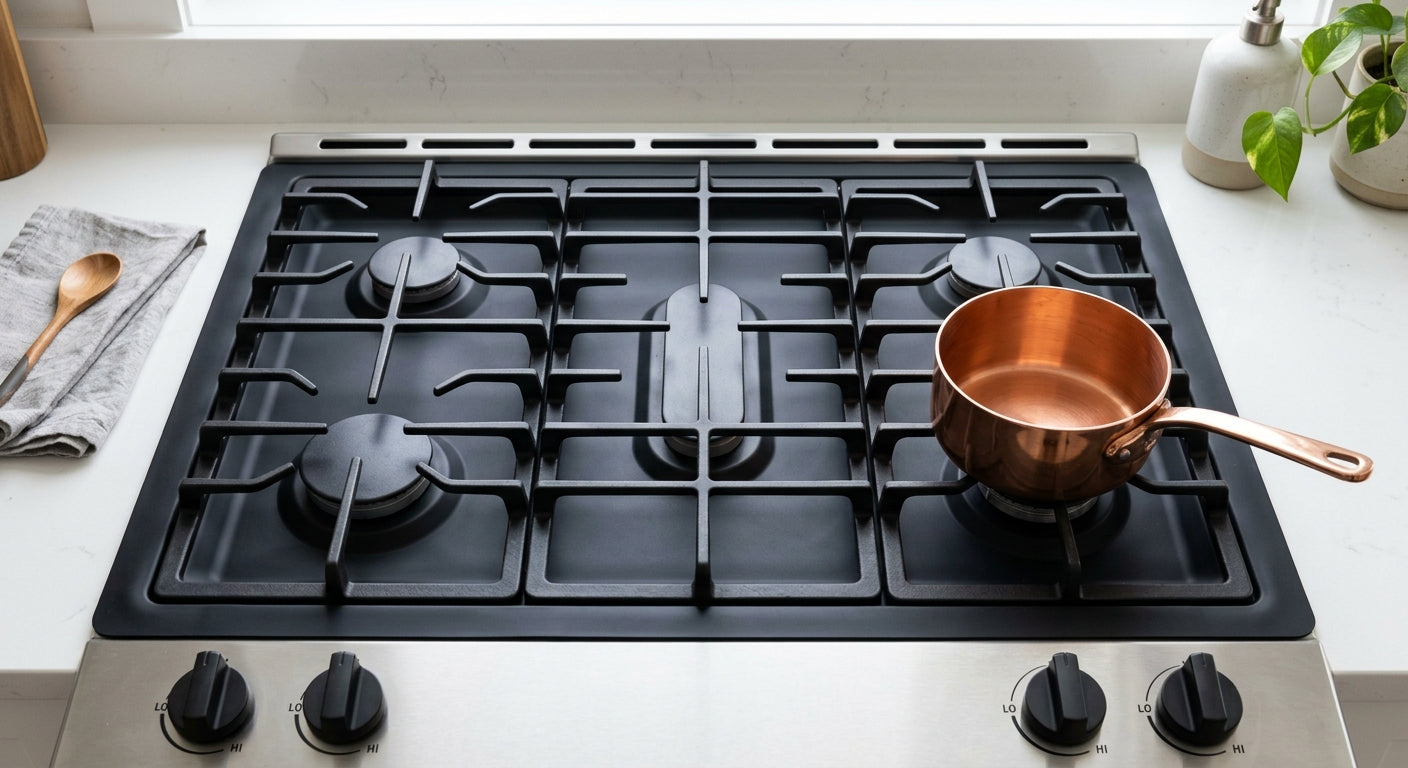
- Never place a liner directly over an open flame or heating element. Liners go around burners, not on top of them. Quality custom-fit liners have pre-cut openings for each burner.
- Do not use a liner on a grill or in an oven above 500°F. Stove top liners are designed for stove top use only.
- Use liners with proper ventilation cutouts. Gas stoves have vent openings that must remain unblocked. Custom-fit liners account for these; generic liners may not.
- Replace liners that show visible wear. If the PTFE coating is peeling or the fiberglass is exposed, it is time for a new liner.
- Keep birds away from the kitchen when cooking at high heat. Birds have extremely sensitive respiratory systems. This applies to all PTFE-coated products, including non-stick pans.
Custom-fit vs generic stove liners
Generic stove liners are sold as rectangular sheets that you cut to size yourself. This creates two problems: you may accidentally cover vent openings (a safety issue on gas stoves), and the fit is never quite right, leaving gaps where spills can still reach the stove surface.
Custom-fit liners are pre-cut using patterns matched to specific stove models. Each burner opening, vent hole, and knob cutout is precisely placed. This means better protection, proper ventilation, and no trimming required.
The bottom line
PTFE is one of the most thoroughly studied and widely used food-safe materials in the world. When used as a stove top liner at normal cooking temperatures, it is safe, stable, and effective. The key is choosing a quality liner that is PFOA-free, FDA-compliant, and properly fitted to your stove model.
Related reading
- Best Stove Top Protectors 2026: Custom-Fit vs Generic — side-by-side cost and feature comparison
- How to Choose the Right Stove Liner for Your Range — gas vs electric vs induction guide
- How to Find Your Stove Model Number — locate your model number in 30 seconds
- Frequently Asked Questions — answers to the most common stove liner questions
Browse our gas range liners or shop by brand: Frigidaire · GE · LG · Samsung · Whirlpool · Maytag · KitchenAid

Leave a comment
This site is protected by hCaptcha and the hCaptcha Privacy Policy and Terms of Service apply.