
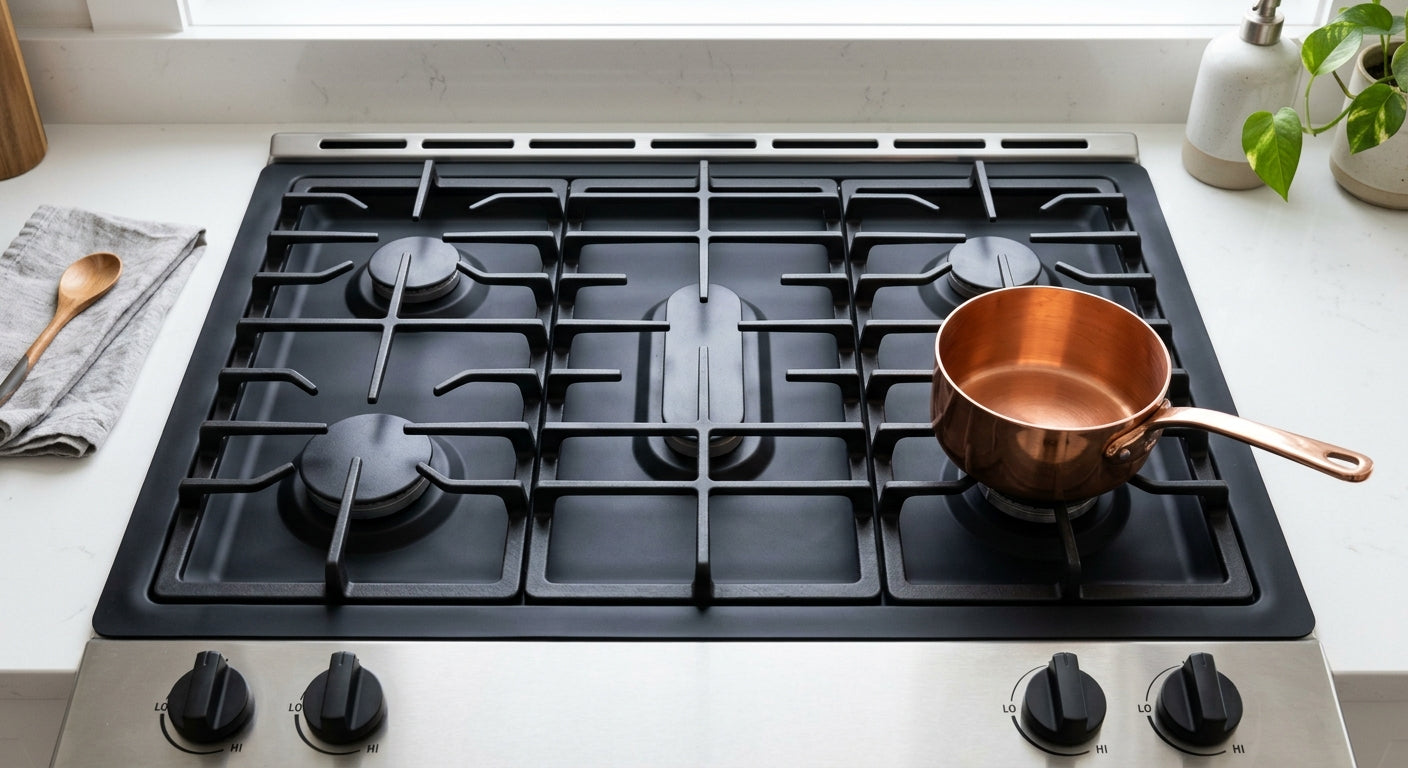
If you are looking for a stove top protector, you have three main options: generic cut-to-fit liners, disposable aluminum foil protectors, or custom-fit liners designed for your specific stove model. Here is an honest comparison to help you decide.
Option 1: Generic cut-to-fit liners
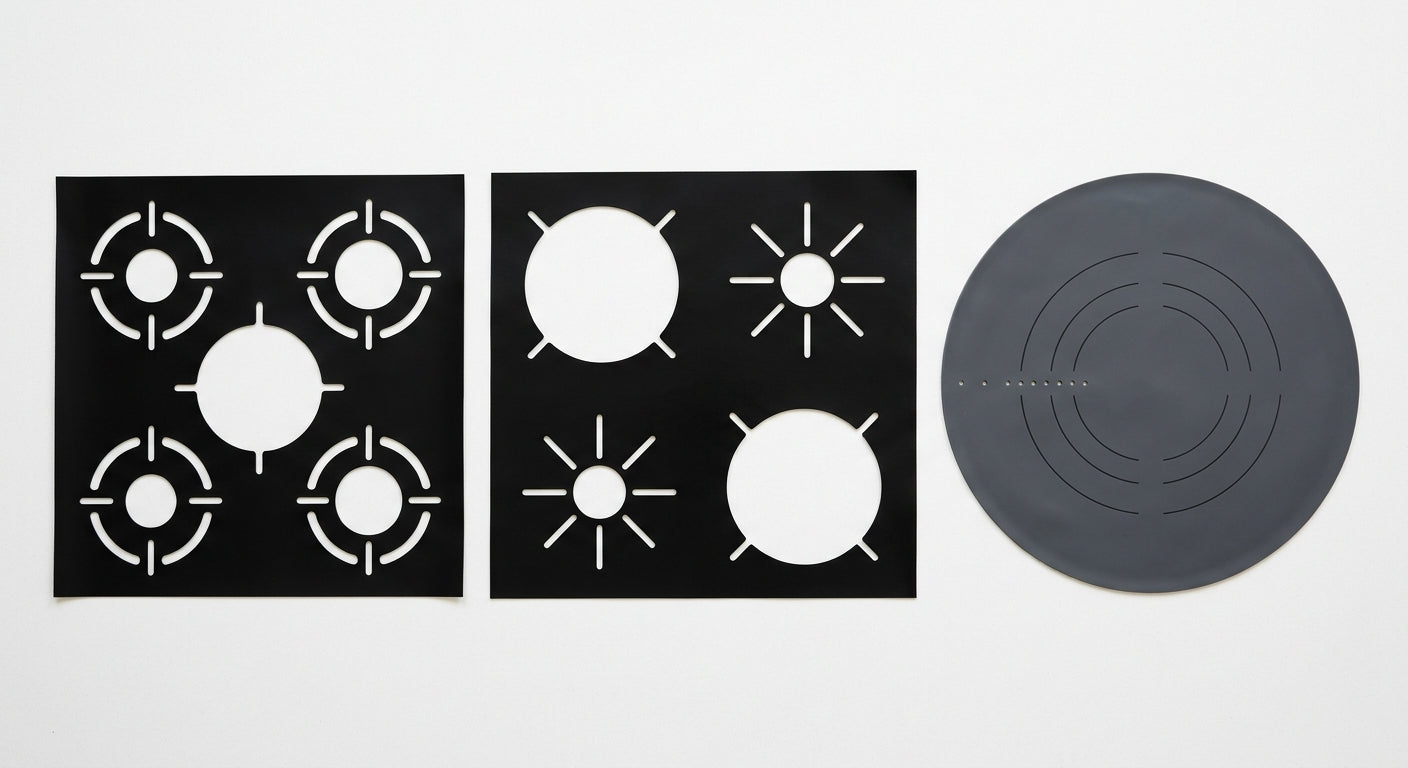
What they are: Rectangular sheets of PTFE-coated fiberglass or silicone, usually sold in packs of 2-4. You cut them with scissors to fit around your burners.
Price: to for a multi-pack
Pros:
- Lowest upfront cost
- Widely available on Amazon and in stores
- One product fits any stove (in theory)
Cons:
- Requires manual cutting, which is difficult to get right
- Burner holes are rarely centered properly after cutting
- Vent openings on gas stoves are often accidentally covered
- Gaps between pieces allow spills to reach the stove surface
- Multiple pieces shift during cooking
- Looks messy with uneven edges
Option 2: Disposable aluminum foil protectors
What they are: Thin aluminum foil sheets (like Reynolds Wrap Stove Top Liners) that you lay on the stove surface and discard after they get dirty.
Price: to per pack, but you need to replace them frequently
Pros:
- Cheapest per-use cost for light cooking
- No cleaning required — just throw away and replace
- Easy to find at grocery stores
Cons:
- Not reusable — ongoing cost adds up ( to per year for frequent cooks)
- Creates waste
- Thin material tears easily
- Can blow off burners from convection airflow
- Not heat resistant enough for high-heat cooking
- Does not fit specific stove layouts
Option 3: Custom-fit liners
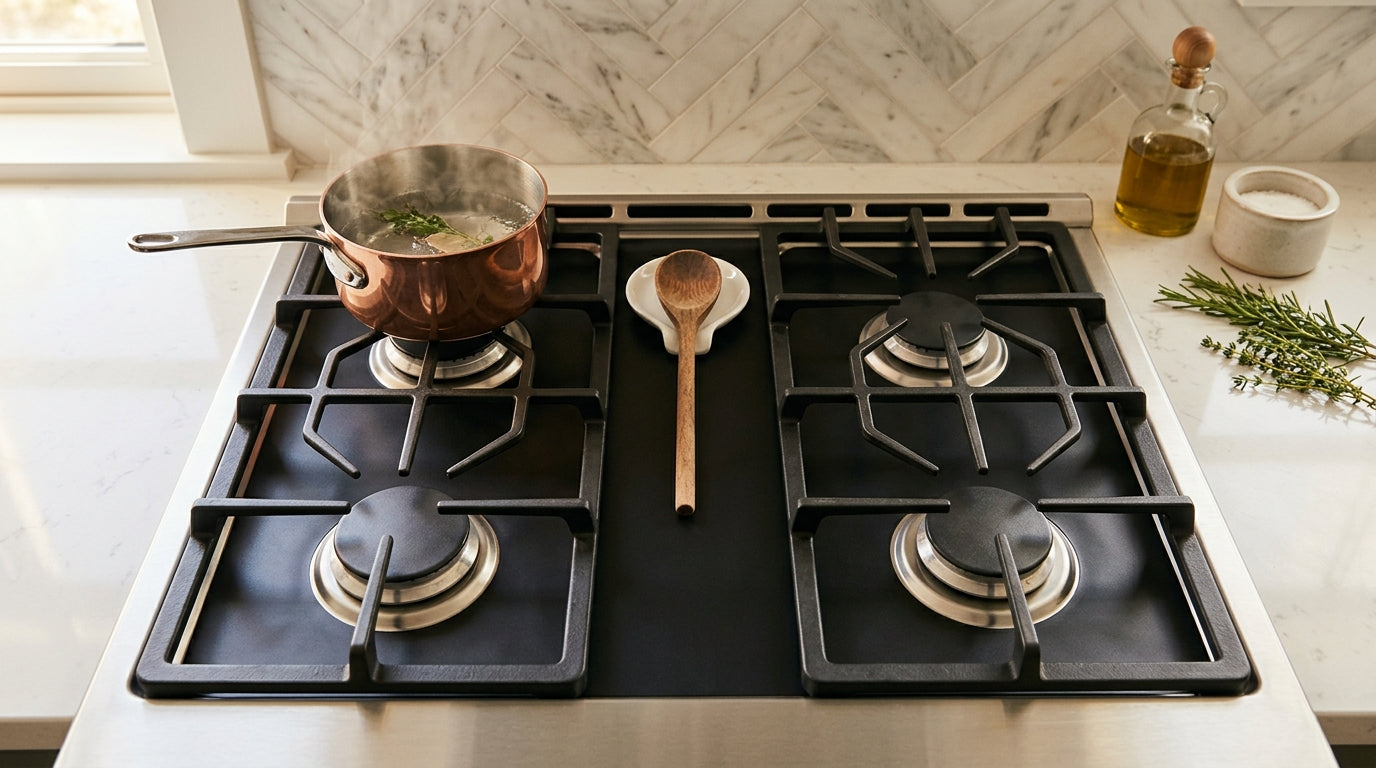
What they are: PTFE-coated fiberglass liners that are pre-cut using a pattern matched to your specific stove model. Each burner opening, vent hole, and knob cutout is precisely placed. Brands like FireFly Home offer custom-fit liners for Frigidaire, GE, LG, Samsung, Whirlpool, Maytag, and KitchenAid ranges.
Price: .99 to .99 per liner
Pros:
- Perfect fit with no cutting required
- Burner holes are precisely aligned
- Vent openings properly accounted for (critical for gas stove safety)
- Single piece covers the entire stove surface — no gaps
- Reusable and dishwasher safe (lasts 1 year or more)
- Looks clean and professional
- Better long-term value than disposables
Cons:
- Higher upfront cost than generic options
- Need to know your stove model number to order the right one
- Not available for every model (though major brands are well covered)
Cost comparison over one year
| Type | Per Unit | Annual Cost | Reusable |
|---|---|---|---|
| Generic cut-to-fit | – | Partially | |
| Disposable foil | – | No | |
| Custom-fit (FireFly Home) | Yes |
Which one should you choose?
Choose generic liners if you rent and do not want to invest in a specific stove model, or if you cook infrequently and do not mind the DIY cutting process.
Choose disposable foil if you want the absolute easiest option and do not mind the ongoing cost and waste.
Choose custom-fit liners if you own your stove and cook regularly, want the cleanest fit with proper ventilation, and prefer a buy-once reusable solution. They pay for themselves within 3 to 4 months compared to disposables.
Related reading
- PTFE Stove Liners: Are They Safe? — the complete safety guide
- How to Choose the Right Stove Liner — gas vs electric vs induction guide
- Find Your Stove Model Number — quick guide for every brand
- FAQ — common questions about materials, fit, and care

Leave a comment
This site is protected by hCaptcha and the hCaptcha Privacy Policy and Terms of Service apply.