
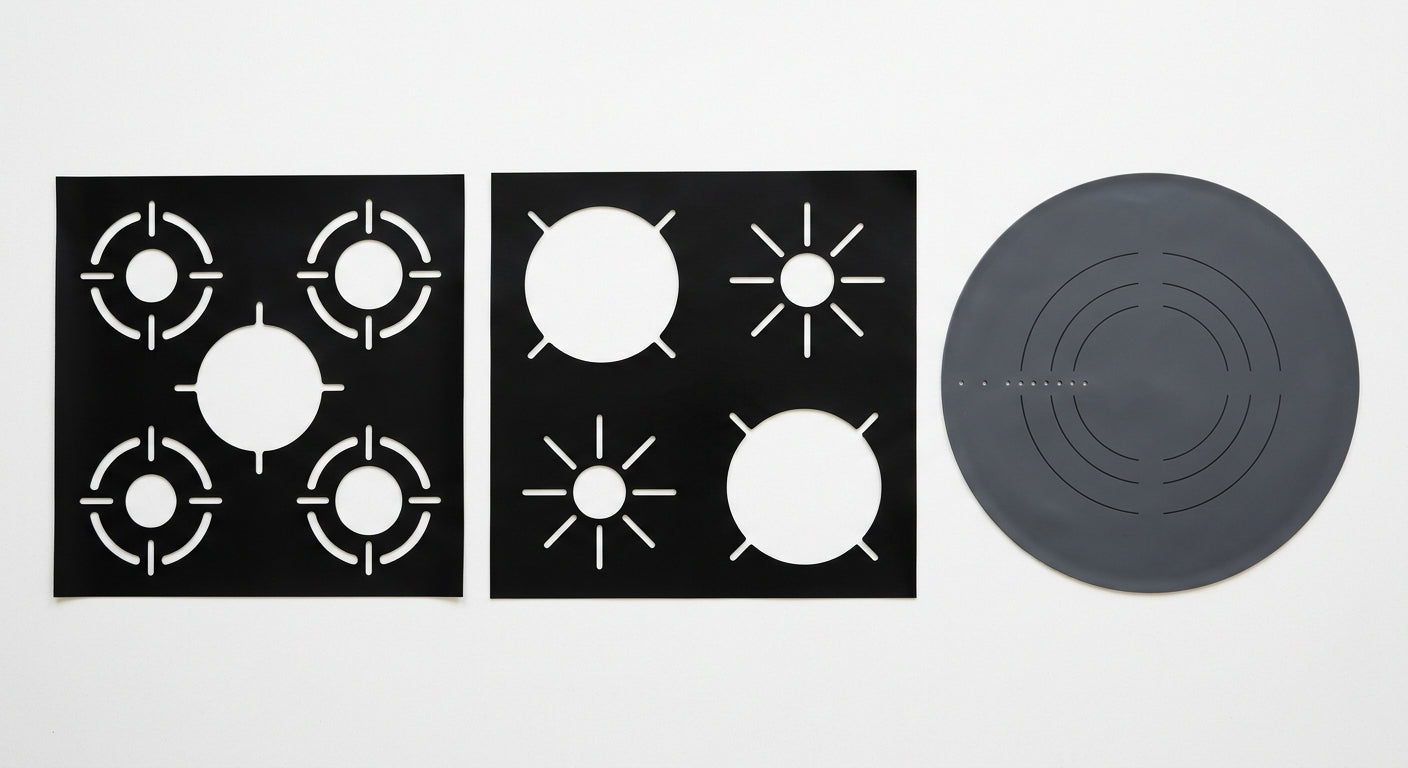
Stove top liners come in different materials, sizes, and configurations. Choosing the wrong one can mean a poor fit, blocked vents, or wasted money. This guide walks you through the four things you need to check before buying.
Step 1: Identify your stove type
Stove liners are not universal. The type of stove you have determines which liner material and cutout pattern you need.
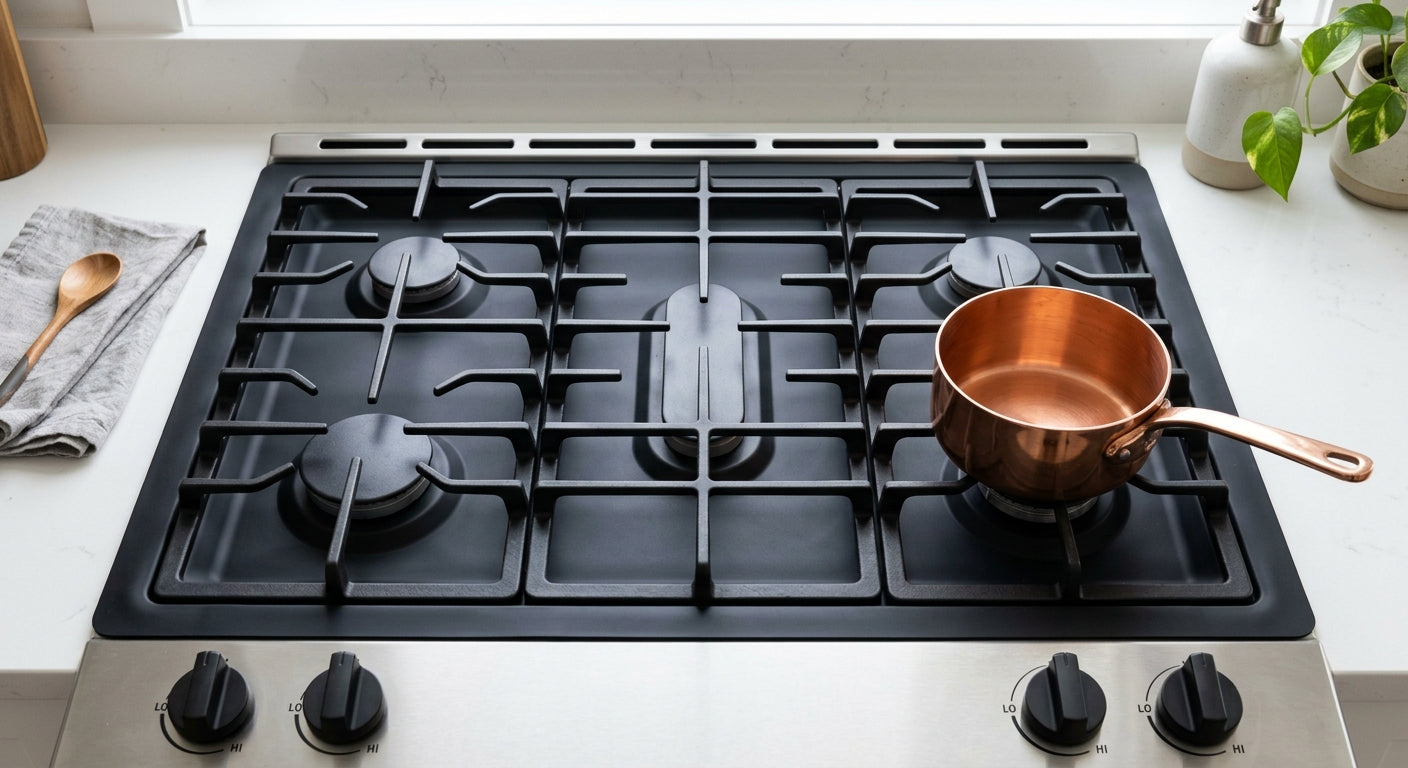
- Gas range: Has open burners with grates on top. The liner sits on the stove surface underneath and around the grates. It needs cutouts for each burner well and for any vent openings. Gas range liners must never block ventilation holes.
- Electric coil range: Has raised coil heating elements. The liner sits on the drip pans or the surface between the coils. Cutouts match each coil position.
- Smooth-top electric range: Has a flat glass-ceramic surface with radiant or induction elements underneath. Liners for smooth-tops must be thin enough to allow heat transfer and cannot interfere with the touch controls.
- Induction cooktop: Similar to smooth-top but uses magnetic induction. Requires a silicone liner rather than PTFE-coated fiberglass, because the liner must be non-magnetic and allow the induction field to pass through.
Step 2: Find your stove model number
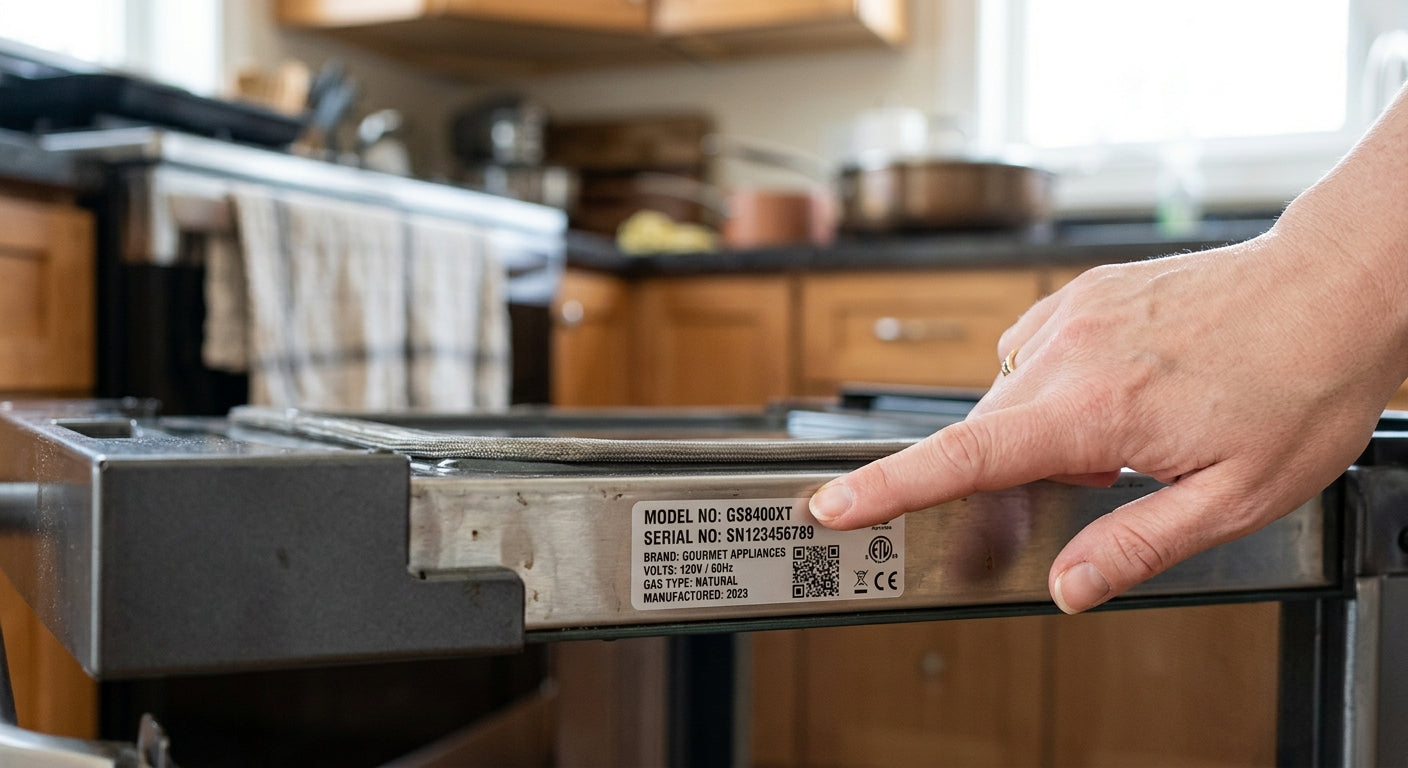
If you want a custom-fit liner, you need your stove's model number. This is different from the brand name or the series name. The model number is a specific alphanumeric code like FGGH3047VF (Frigidaire) or PGS930 (GE Profile).
Where to find it:
- Gas ranges: Open the oven door and look on the frame or inside wall. There is usually a sticker or metal plate with the model and serial number.
- Electric ranges: Check behind the rear control panel (you may need to pull the stove out slightly) or inside the oven door frame.
- Under the cooktop: Some models have the label underneath the lift-up cooktop surface.
- Owner's manual: The model number is on the first page or back cover.
For a step-by-step visual guide, visit our Finding the Model Number page.
Step 3: Choose the right material
| Material | Best For | Heat Limit | Dishwasher |
|---|---|---|---|
| PTFE-coated fiberglass | Gas and electric ranges | 500°F | Yes |
| Silicone | Induction cooktops | 450°F | Yes |
| Aluminum foil | Temporary, light-use | 400°F | No (disposable) |
PTFE-coated fiberglass is the most widely used material for gas and electric range liners. It is heat resistant, non-stick, and reusable. For induction cooktops, silicone is the better choice because it does not interfere with the magnetic field.
Step 4: Custom-fit or generic?
This is the most important decision.
Choose custom-fit if:
- You own your stove and plan to keep it for at least a year
- You have a gas range where vent openings must stay clear
- You want a single-piece liner that covers the entire surface
- You do not want to spend time cutting and trimming
Choose generic if:
- You are renting and may move soon
- Your stove model is not available in custom-fit
- You want the lowest possible upfront cost
If you decide on custom-fit, check whether your specific model is available. FireFly Home covers the most popular models from Frigidaire, GE, LG, Samsung, Whirlpool, Maytag, and KitchenAid.
Quick checklist before you buy
- What type of stove do I have? (gas, electric coil, smooth-top, induction)
- What is my model number?
- Is a custom-fit liner available for my model?
- Am I choosing the right material for my stove type?
- Does the liner have proper vent cutouts for gas ranges?

Leave a comment
This site is protected by hCaptcha and the hCaptcha Privacy Policy and Terms of Service apply.